What Is a Tax Engine? How It Works and Why Your Business Needs One
As tax complexity grows, businesses need a better way to apply the right tax consistently across systems, jurisdictions, and transactions. Learn how tax engines work and why they play a critical role in modern tax automation.

What Is a Tax Engine? How It Works and Why Your Business Needs One
With more than 20,000 tax jurisdictions worldwide—each with its own rates, rules, and reporting requirements that can change frequently—it can be difficult to determine the correct tax for every transaction.
Determining the correct tax becomes even more challenging as your business expands. New products, new markets, and new systems often mean more tax rules to manage. What once worked in a single system can become difficult to maintain across multiple ERP, e-commerce, procurement, and financial applications. Manual processes and disconnected systems can no longer keep pace.
That's why many businesses turn to a tax engine.
What Is a Tax Engine?
A tax engine is software that automates tax determination by calculating and applying the correct indirect tax—such as sales tax, consumer use tax, VAT, or GST—on a transaction. To do this, it evaluates information such as the product being sold, customer location, applicable tax rules, and jurisdictional requirements.
Tax determination is often more complex than it appears. Take a KitKat, for example. Because it contains a wafer, some jurisdictions classify it as a baked good and apply different tax rules. Or consider a face or body lotion that contains SPF. In some locations, it may qualify for tax treatment similar to sunscreen. These kinds of nuances exist across countless products and jurisdictions. The tax applied to a purchase can vary based on what you're selling, where you're selling it, who is buying it, and the local tax rules in effect. A tax engine automatically evaluates those variables and determines the appropriate tax.
How Does a Tax Engine Work?
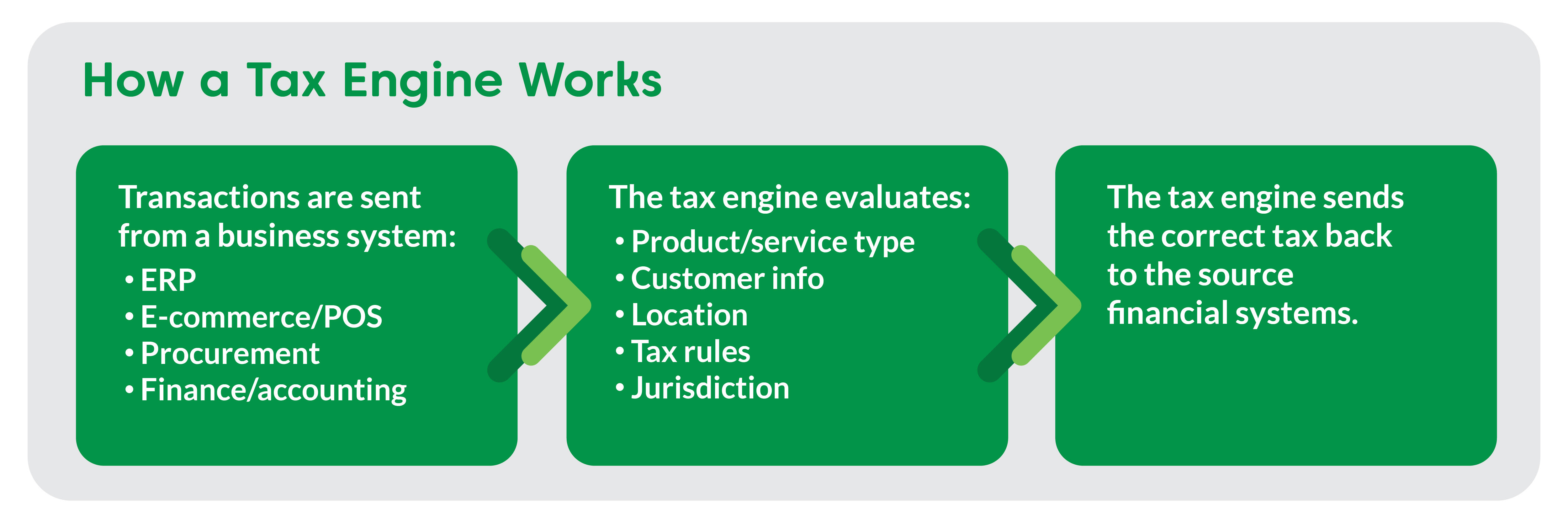
When a transaction is created in an ERP, e-commerce, procurement, or financial system, the transaction details are sent to the tax engine in real time.
The tax engine evaluates information such as:
- Product or service type
- Customer information
- Ship-to and bill-to locations
- Applicable tax rules and rates
- Jurisdiction-specific requirements
Using that information, the tax engine determines the appropriate tax and sends the calculated tax amount back to the originating system so the transaction can be completed.
Tax engines are commonly integrated with ERP, e-commerce, procurement, and financial systems. Instead of maintaining tax rules and calculations separately across multiple applications, you can manage them in one place.
What Are the Benefits of Using a Tax Engine?
A tax engine helps simplify tax determination by centralizing tax rules and calculations in one place. Instead of managing tax across multiple systems, you can apply tax more efficiently across your business.
Key benefits include:
- Improved tax accuracy by automatically applying the appropriate tax rules
- Reduced risk and audit exposure through more consistent tax determination and better visibility into tax decisions
- Less manual effort by automating tax calculations and reducing rework
- Centralized control by managing tax rules and calculations in one place
- Support for business growth as you expand into new markets, products, channels, and systems
Whether you're responsible for tax, finance, or IT, a tax engine can help reduce manual effort, improve visibility, and create a more scalable approach to managing tax across the business.
Why Getting Tax Right Upfront Matters
Getting tax right at the start of a transaction matters. When tax is calculated incorrectly, the impact doesn't stop there. Errors can create additional work later in the process, leading to reporting issues, compliance challenges, audit risk, and costly corrections.
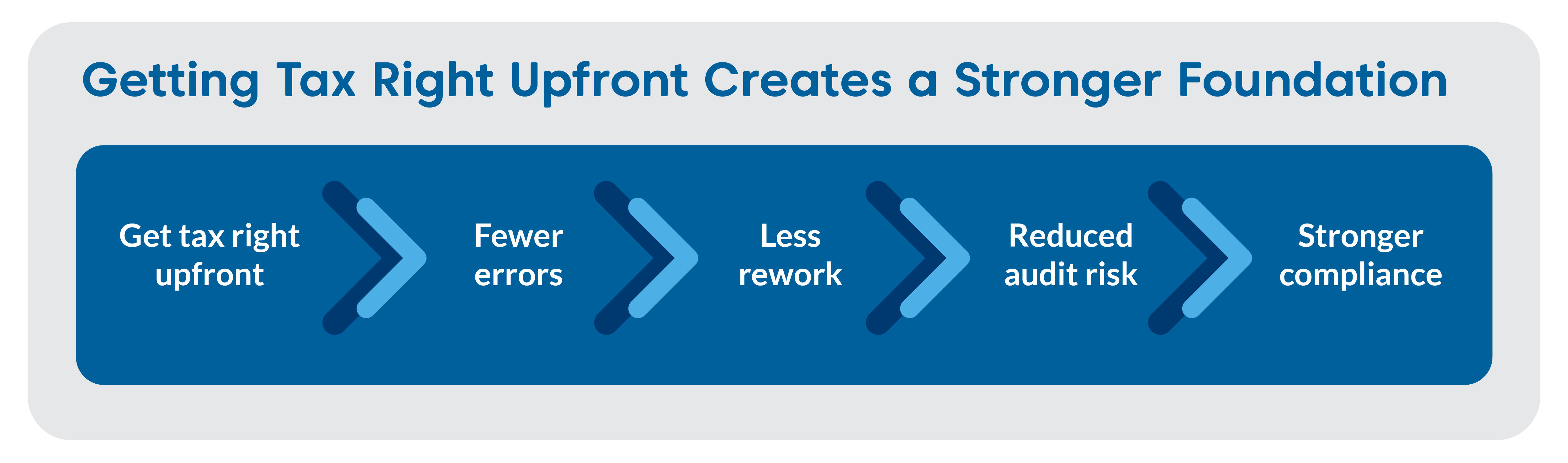
The benefits of accurate tax determination extend far beyond the transaction itself. It supports reporting, audits, compliance, and broader tax and finance operations. As tax complexity grows, organizations need a reliable way to apply tax consistently and accurately across the business.
Without a centralized approach to tax determination, you may face:
- Financial risk from underpayments, overpayments, penalties, interest assessments, and costly remediation efforts
- Operational inefficiencies caused by manual reviews, reconciliations, exception handling, and rework
- Technology challenges associated with maintaining tax logic across multiple systems and keeping tax rules up to date
- Reduced confidence in tax accuracy when different systems rely on different tax logic or outdated rules
What Should You Look for in a Tax Engine?
Not all tax engines are the same. As you evaluate solutions, consider whether they can support your business today while adapting to future growth and regulatory change.
As you compare solutions, here are a few capabilities to look for:
- Accurate and up-to-date tax content that keeps pace with changing regulations and jurisdictional requirements.
- Integration with your business systems, including ERP, e-commerce, procurement, and financial applications.
- Centralized control of tax rules and calculations so tax can be managed consistently across your organization.
- Scalability to support growth, including new jurisdictions, products, channels, systems, and business models.
- Visibility and audit readiness, with clear reporting and insight into how tax decisions are being made.
- AI-enabled productivity tools that help automate complex tax tasks and improve efficiency.
- Support for the broader tax lifecycle, including related tax, compliance, reporting, and exemption management processes.
- Deployment flexibility to align with your organization's performance, security, and operational requirements.
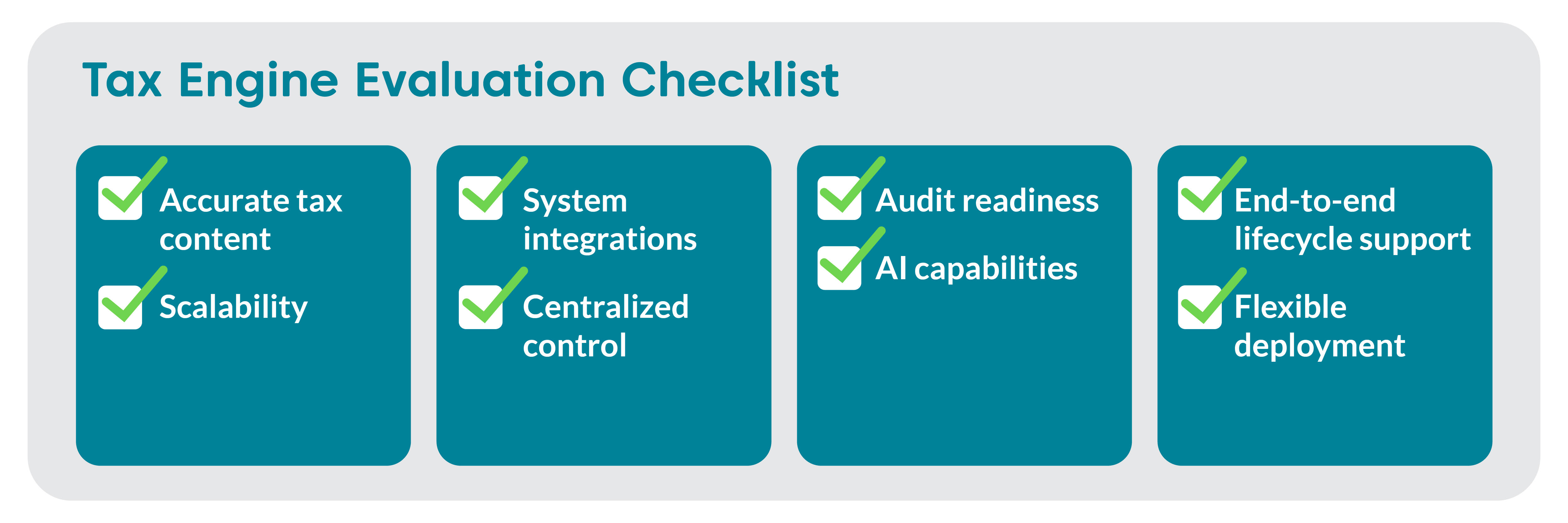
A tax engine should do more than automate calculations. It should help you create a more scalable and sustainable approach to tax determination as complexity increases.
Is It Time to Invest in a Tax Engine?
You may reach a point where your current approach to managing tax can no longer keep up with your business. If any of the following situations sound familiar, it may be time to evaluate whether a tax engine can help:
- Expanding into new regions or jurisdictions
- Managing tax across multiple systems or ERPs
- Addressing recurring audit or compliance challenges
- Experiencing increasing transaction volumes
- Preparing for ERP modernization initiatives
- Launching new e-commerce or digital business models
If several of these challenges sound familiar, it may be a sign that your current approach to tax determination is no longer keeping pace with your business.
See How Vertex Automates Tax Determination
You don't need to wait until tax becomes a bottleneck before evaluating a tax engine.
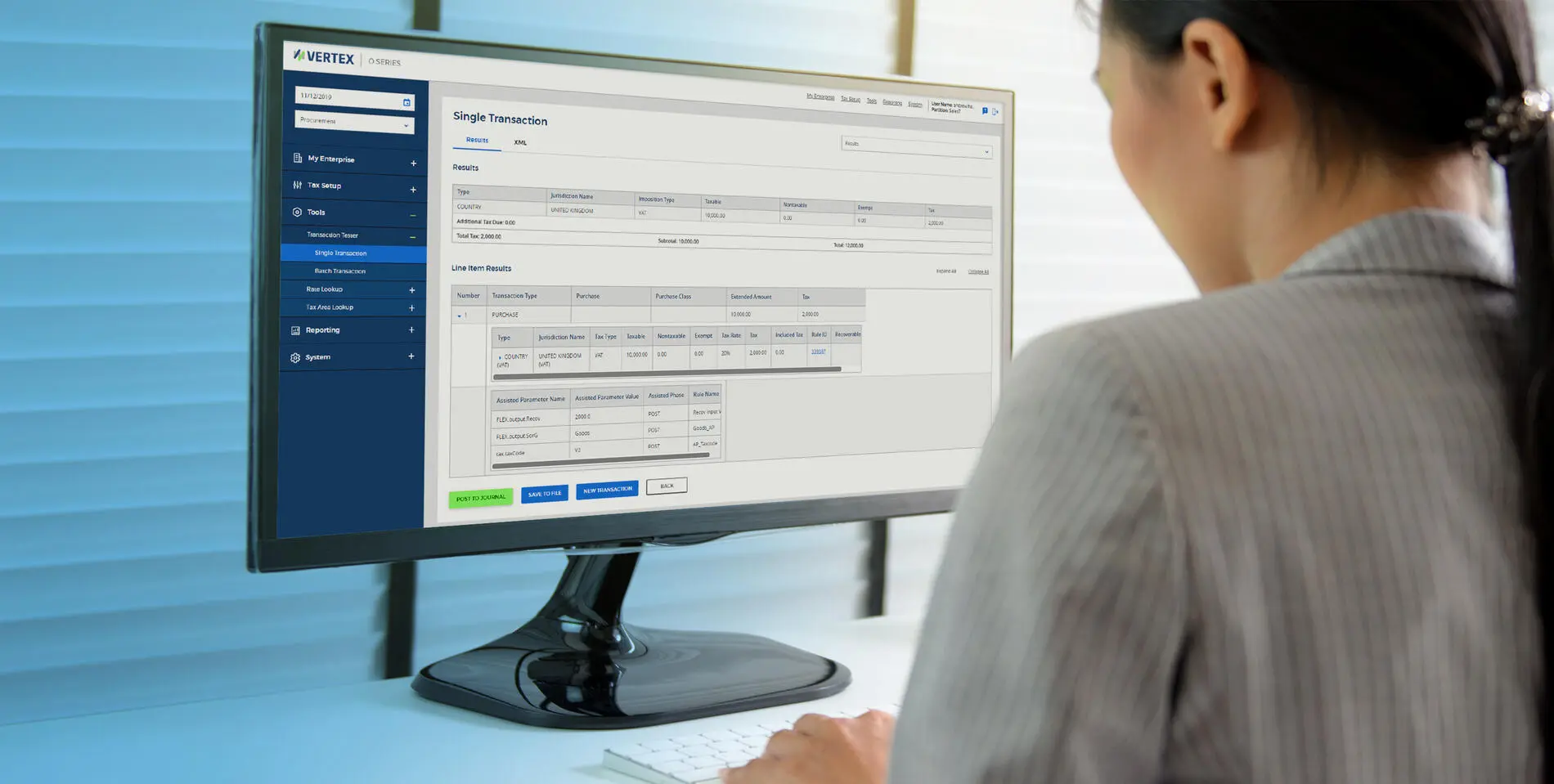
See how tax automation works in practice. Explore Vertex O Series to learn how you can improve tax accuracy, centralize tax determination, and scale your tax operations as complexity grows.
Vertex O Series
Streamline indirect tax management with deep, proven tax content and software built to scale.
Learn More