7 Reasons to Add a Tax Engine to ERP
Adding a tax engine to your ERP can increase accuracy and improve efficiency and compliance while reducing audit risks.

Add a tax engine to your ERP for VAT/GST determination
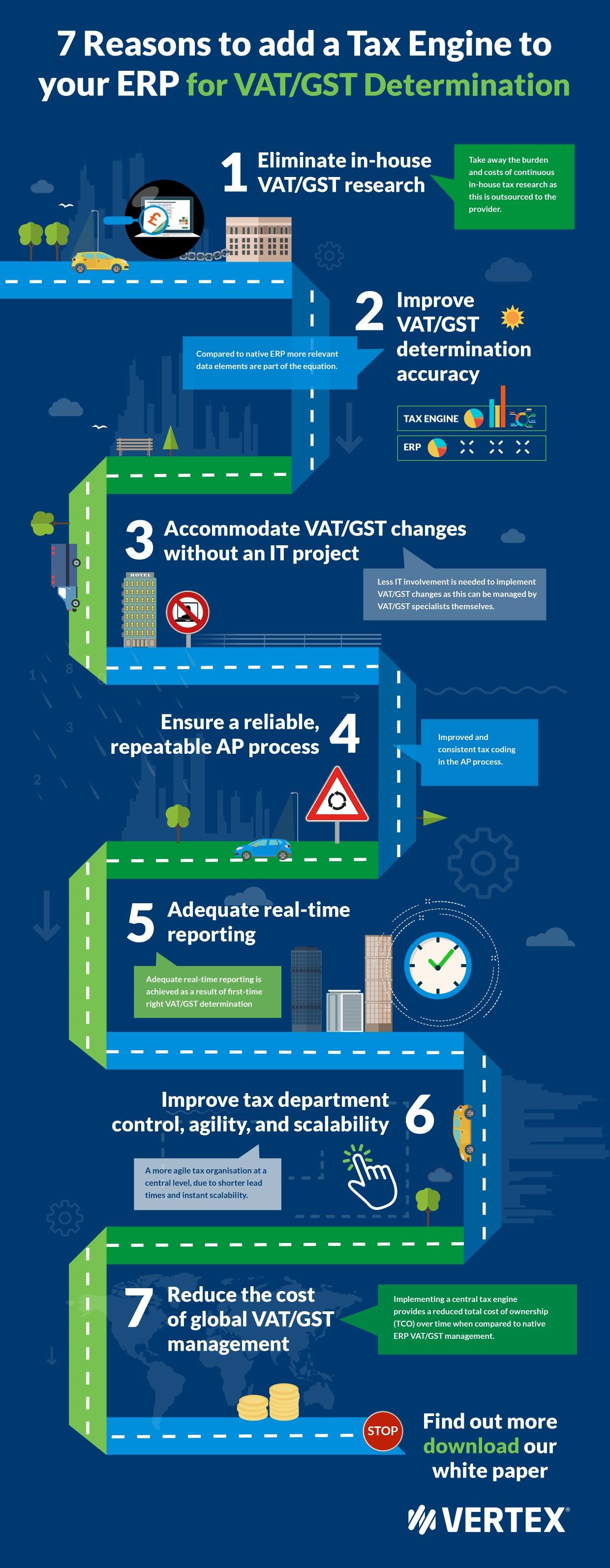
In addition to reducing the cost of global VAT/GST management, adding a tax engine to your ERP removes the burden of in-house tax research. It also improves VAT/GST determination accuracy, accommodates changes, and ensures a reliable, repeatable AP process for consistent tax coding. Learn more in this infographic:
Improve control, agility, and scalability
Get real-time reporting and become a more agile tax organization — with shorter lead times and the ability to scale instantly ― when you add a tax engine to your ERP.
Reasons to add a tax engine to your ERP:
- Improvements for VAT/GST: Eliminate the need for continuous in-house tax research on VAT/GST changes, improve accuracy, implement changes without creating an IT project, and reduce costs for VAT/GST management.
- Improvements for tax department agility and control: Get consistent tax coding in the AP process and real-time reporting, allowing a shorter lead time and more opportunity for scalability.
If you enjoy this infographic, be sure to download the corresponding white paper, where we explore these 7 reasons in further detail.